Fresh Argentinian Chimichurri Sauce: Step-by-Step Instructions
On this page
Pro Tips for Better Results
1. Use a micro‑plane or fine grater for the garlic if you want an ultra‑smooth texture; it releases more allicin, intensifying flavor.
2. Let the sauce rest uncovered for five minutes; exposure to air helps the herbs release additional aromatic compounds.
3. Adjust heat by varying the red pepper flakes; start with a pinch and increase gradually to suit your palate.
4. For a deeper color, briefly toast the parsley and oregano in a dry pan before chopping, but be careful not to burn them.
5. If you prefer a thinner sauce for drizzling, add a splash more olive oil or a teaspoon of water at the end of mixing.
Instructions
- Gather all fresh herbs, wash them gently, and pat dry; excess moisture can dilute the sauce.
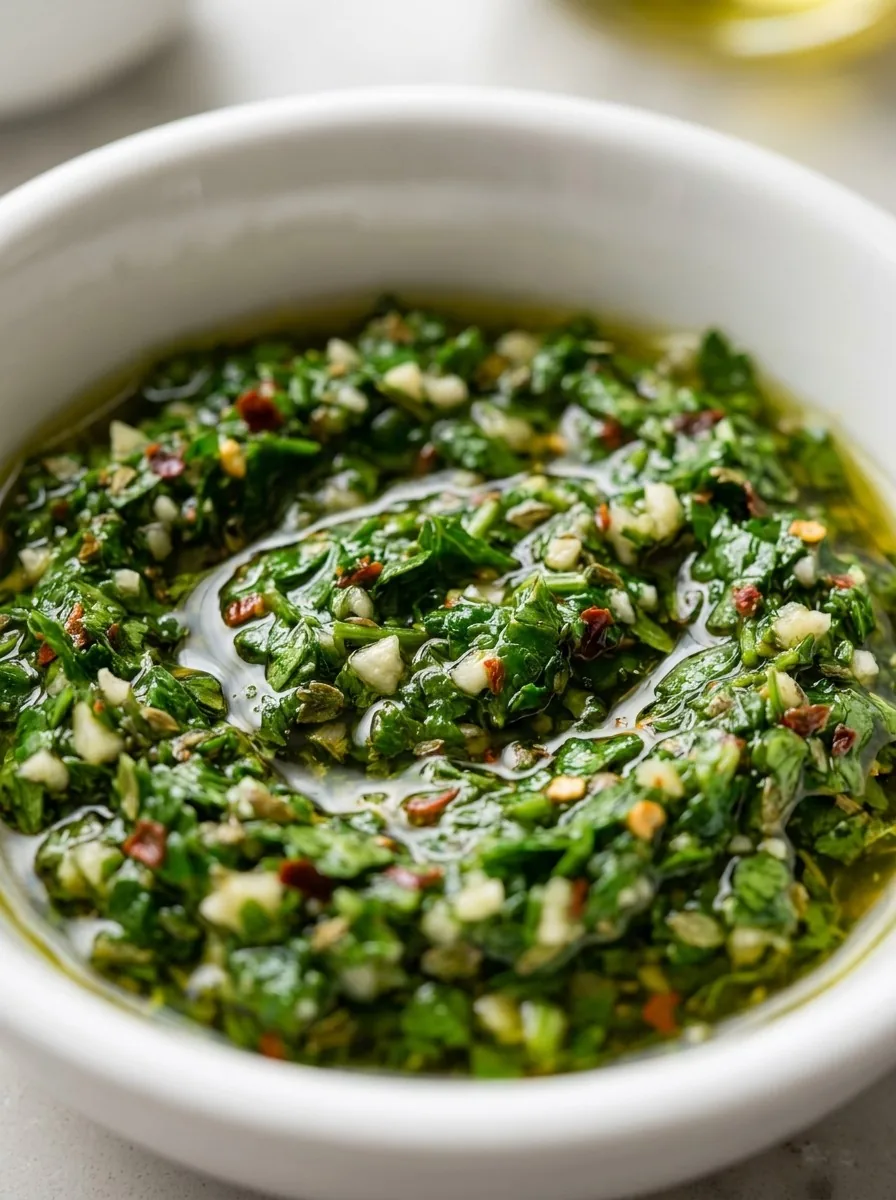
- Finely chop the parsley and oregano together, keeping the pieces small enough to release flavor but not turn mushy.
- Mince the garlic cloves until they form a paste; this helps distribute the pungent aroma evenly.
- Place the chopped herbs and garlic in a medium bowl, then sprinkle the sea salt over them; the salt draws out juices, creating a natural emulsifier.
- Add the red wine vinegar and stir; the acidity balances the oil and brightens the herbaceous notes.
- Slowly whisk in the olive oil, allowing the mixture to emulsify; this creates a smooth, cohesive sauce rather than a separated dressing.
- Stir in the red pepper flakes and optional lemon juice, tasting as you go to achieve your desired heat and brightness.
- If the sauce feels too thick, drizzle in a tablespoon of water, mixing until the consistency is pourable but still clings to a spoon.
- Let the chimichurri rest for five minutes at room temperature; this brief resting period lets the flavors meld before serving.
Recipe Variations
If you enjoy a more pungent profile, swap half of the parsley for cilantro and add a dash of smoked paprika for a subtle smoky note. For a citrus‑forward twist, replace the red wine vinegar with equal parts lime juice and white wine vinegar, and increase the lemon juice to two teaspoons. Vegetarians can blend in finely diced roasted red peppers for added sweetness and color, turning the sauce into a versatile condiment for grilled tofu or tempeh.
Serving Ideas
Drizzle chimichurri over a classic Argentine asado steak just before serving to let the sauce melt into the hot meat. Use it as a vibrant topping for grilled portobello mushrooms, or toss it with roasted potatoes for a herb‑infused side. It also works as a bright dip for crusty bread, a topping for avocado toast, or a salad dressing when thinned with a little extra vinegar.
If you like making sauces from scratch, try our fresh basil pesto, sticky honey garlic sauce, homemade teriyaki sauce next.
Keeping It Fresh
Store the sauce in a clean glass jar with a tight‑fitting lid. Keep it in the refrigerator and allow the surface oil to rise; simply stir before each use. To prevent discoloration, press a thin layer of plastic wrap directly onto the surface of the sauce before sealing the jar. The sauce will stay vibrant for up to three days; after that, the herbs may darken but the flavor remains safe to consume.
Wrapping Up
Chimichurri is more than a sauce; it’s a celebration of fresh herbs, bright acidity, and simple technique. By following this straightforward, no‑cook method, you can create a pantry‑ready condiment that elevates everyday meals and honors Argentine culinary tradition. Experiment with the suggested variations, keep the sauce properly stored, and enjoy its bold flavor whenever the craving strikes.
Frequently Asked Questions
Can I use dried oregano instead of fresh?
Fresh oregano provides a brighter, more aromatic profile, but if you must use dried, reduce the amount to one‑third and add it later in the mixing stage.
How long will the chimichurri keep in the fridge?
Stored in an airtight container, it stays fresh for up to three days; the herbs may darken, but the flavor remains intact.
Is it okay to freeze chimichurri?
Yes, freeze in small portions; thaw in the refrigerator and give it a quick stir before using to re‑emulsify.
Can I substitute red wine vinegar with another acid?
Apple cider vinegar or white wine vinegar work, though they will subtly change the flavor balance; keep the quantity the same.
What dishes pair best with this sauce?
Grilled steak, roasted chicken, grilled vegetables, and even fried potatoes benefit from the herb‑forward, tangy kick of chimichurri.
◆ ◆ ◆
← Back to ingredientsGet new sauce recipes
One tasty homemade sauce in your inbox each week. No spam, unsubscribe anytime.
Comments (14)